

Nature's fireworks
... and whales and seabirds too

Welcome to the August issue of Nature’s tidings, back again after a summer break spotting dolphins, seabirds, mountain clouds and more.
Tuesday night sees the peak of the Perseid meteor shower, which is one of the best of the year with the added advantage of warm summer nights.
The Perseids occur as debris from Comet Swift-Tuttle burns up on hitting the Earth’s atmosphere and rates can reach 50-100 per hour, although 10-20 per hour is perhaps more typical. As with all meteor showers, individual meteors appear to fan out from a single point in space called the radiant, whose height (altitude) and compass bearing (direction) change during the night due to the rotation of the Earth. However, rather than looking directly at the radiant, typically the best sightings occur about 30-40 degrees to the side and up to 60 degrees above.
The excellent www.timeanddate.com website gives a guide to the best viewing times and you’ll also need to check the cloud cover on the night; this earlier post gives some tips on how to find out. For myself, from 10pm onwards on 12 August looks the best bet plus a day or two either side if it’s cloudy on the night of the peak.
You’ll also need a dark spot to view them from and in a previous post I discussed just how dark is ideal. This also described how last year they coincided with a spectacular display of the Northern Lights so here’s hoping, although the chances of that happening again are small!
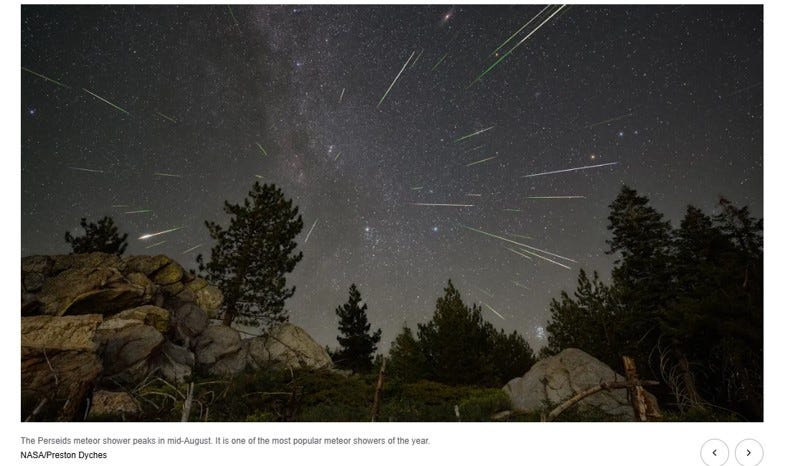
Illustration of the Perseids radiant (NASA/Preston Dyches)
Turning now to the sea, for cetacean watchers it’s proving to be an unusual year in UK waters, with increasing numbers of killer whales (orcas), dolphins and minke whales appearing well away from their usual locations. For example, who would have thought that a large pod of dolphins would appear to have relocated to the North Yorkshire coast, or that orca sightings would be reported all along the east coast of northern England and Scotland?
Meanwhile, in their more usual feeding grounds of northwest Scotland, there has been an unusually large number of minke whale sightings, including some breaching the surface while lunge feeding. However, humpbacks and orcas seem to be less abundant than usual so far, although numbers may yet increase. If you are interested in trying for a sighting, this post gives some tips on when and where to go.
Thankfully, along coastal cliffs and outcrops seabird numbers seem to be recovering from the recent outbreaks of avian flu, with some unusual adaptations; for example, gannets with black rather than blue irises seem to have become more common.
Further inland, the UK’s most inland breeding colony of seabirds – the Tyne kittiwakes – seems to be doing fine, with some chicks already larger than the adults on a recent visit and tentatively taking their first flights. Viewed from one of their favourite and more unusual nesting sites - the Baltic Centre for Contemporary Art - it was entertaining to see the differences in landing ability between adults and the recently fledged chicks, who will soon be left to fend for themselves.
For most seabird species, August is probably the last decent month for a sighting in the UK as most will soon be heading off to sea for the autumn and winter. However, gannets linger longer with good numbers remaining at locations such as the fabulous Bass Rock in southeast Scotland.
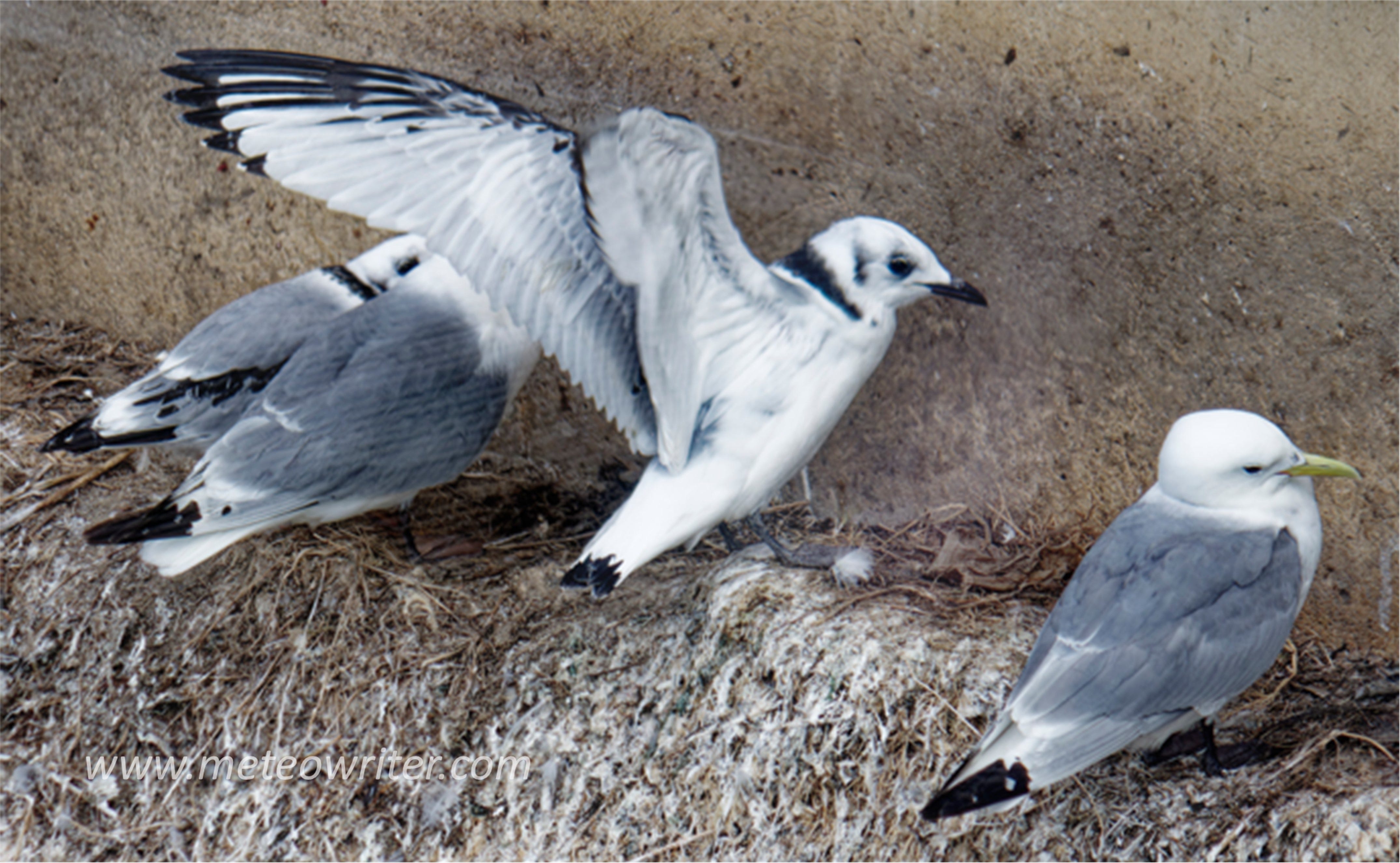
A young kittiwake tries out its wings at the Baltic Centre for Contemporary Art (July 2025)
Staying safe in the dark
When viewing meteor showers, just getting to a viewpoint is sometimes an adventure, with strange noises in the distance and mysterious silhouettes appearing in the dark.
In all the excitement it is important not to forget your safety so, if possible, check out new viewpoints in daylight first. Even then it can be difficult to orientate yourself to the right direction unless you know the constellations; a compass helps or smartphone compass app helps.
As well as being more fun, meteor watching with others is safer as you never know who else will be around in the dark. However, try to avoid disturbing local residents with excessive noise. In winter, snow and ice are other potential hazards so be sure to take windscreen de-icer if driving and be ready to adjust your plans if roads could be blocked or iced up on your return. From Spectacular Britain, Bloomsbury, 2024.
Thank you for reminding me to look up next week!